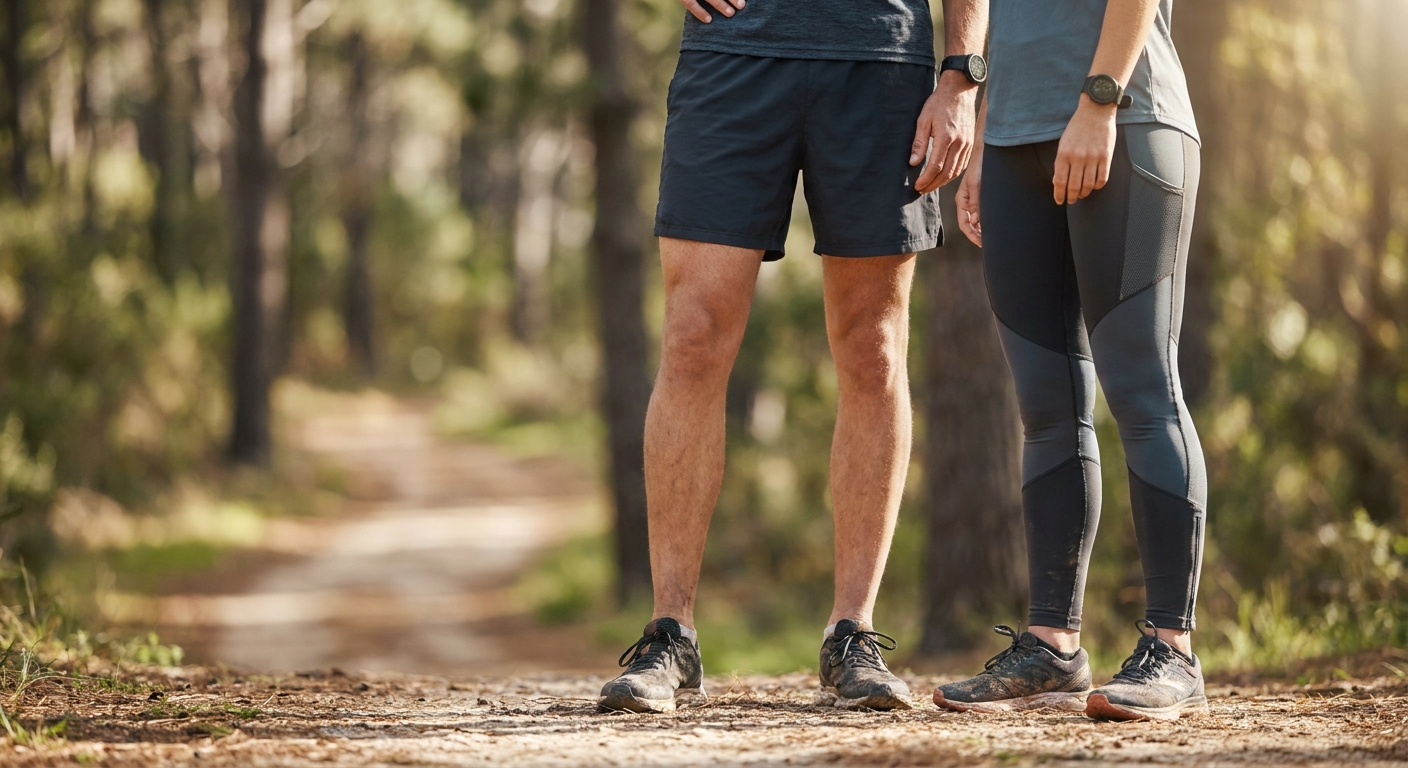
Picking shorts and leggings for running sounds simple until you're standing in front of ten near-identical pairs wondering which one will actually survive a 5K without chafing, riding up, or going see-through on a squat. The right pair comes down to fabric, fit, and how you actually run — not the marketing copy on the tag.
- Moisture-wicking polyester-spandex blends beat cotton for every run over 20 minutes — cotton holds sweat and chafes.
- A 4-6 inch inseam suits most runners; anything shorter needs a built-in liner to avoid chafing.
- High-waisted leggings with a wide flat band outperform low-rise for runs over 5km — less slipping, less adjusting.
- Hot Deal Warehouse activewear runs up to 30% off, which matters if you're still working out what fit and fabric you prefer.
- Compression leggings help with recovery runs; relaxed-fit shorts win for hot Australian summers.
Why this matters
The wrong shorts or leggings don't just look bad in photos — they cost you kilometres. Chafing, a waistband that rolls, or fabric that traps heat can turn a comfortable run into one you cut short. Fit and fabric choice affect performance more than price does, and picking based on looks alone is the most common mistake new runners make.
A quick browse through Hot Deal Warehouse shows how much variation exists even within a single activewear range — waist height, fabric weight, and pocket placement all change how a pair performs once you're a kilometre into a run and sweating.
Who this is for
This guide is for anyone running regularly outdoors or on a treadmill who's tired of guessing at fit — beginners building a first running kit, parkrun regulars replacing worn-out gear, and budget-conscious shoppers who want quality without paying premium sportswear prices. If you're running under 30 minutes a few times a week or training for a longer event in 2026, the same fit and fabric rules apply either way.
What to look for in shorts and leggings for running
Moisture-wicking fabric
Cotton soaks up sweat and stays wet, which means chafing and a heavier feel by kilometre three. Polyester-spandex blends (usually 80/20 or 85/15) pull moisture away from skin and dry fast, which is the single biggest fabric difference between gear meant for running and gear meant for lounging.
Waistband height and construction
A wide, flat waistband that sits at or above the natural waist stays put through arm swing and stride changes. Thin drawstring waistbands on budget shorts tend to loosen after 20 minutes, which means constant adjusting instead of running.
Inseam length
Most running shorts sit between a 4-6 inch inseam — long enough to prevent thigh rub, short enough to avoid bunching. Leggings should sit at full ankle length or a 7/8 crop; anything that bunches at the knee restricts stride.
Built-in liner or compression layer
Short inseams under 4 inches need a liner to stop inner-thigh chafing on longer runs. Leggings with light compression through the calf and thigh help circulation on recovery days without restricting stride on faster efforts.
Pocket placement
A zip pocket at the small of the back or a side leg pocket that actually holds a phone without bouncing matters more than people expect. Loose front pockets on shorts are the most common design flaw — they bounce and eventually stretch out.
Weight for Australian conditions
Summer running in Australia calls for a lighter, more breathable fabric weight than a winter base layer. Leggings meant for cooler months often use a heavier brushed-back fabric that overheats fast once temperatures climb past 25°C.
Top picks
The all-rounder — cheap activewear for women on a budget. This is the pick for anyone building a first running kit without committing to premium sportswear pricing. The range covers moisture-wicking basics at prices that let you try two or three fits before settling on what actually works for your stride. Verdict: Buy if you're starting out and don't yet know your preferred waist height or inseam.
The beginner-safe pick — activewear sets for beginners at the gym. Matching top-and-bottom sets take the guesswork out of pairing fabric weights, which matters when you're new to running and don't yet know what chafes and what doesn't. A coordinated set also means you're not mixing a heavy cotton top with lightweight running shorts and overheating halfway through. Verdict: Consider if you want one straightforward purchase rather than mixing and matching separate pieces.
The men's training pick — best men's gym clothes for training in Australia. Built around Australian training conditions, this range leans toward breathable shorts and fitted leggings suited to both gym sessions and outdoor runs. It's the pick for anyone splitting time between weights and cardio who wants one wardrobe that handles both without buying twice. Verdict: Buy if your week mixes running with resistance training.
The wildcard — mix-and-match separates. Buying shorts and leggings as separate pieces rather than a matched set lets you layer for Australian winter mornings and strip back for summer heat without owning two full kits. It costs more up front in decision-making but less in wardrobe duplication over a year. Verdict: Consider if you run year-round rather than seasonally.
What to avoid
- Cotton-blend leggings marketed as "athletic wear" — they look the part in photos but soak through and stay wet, which is exactly what you don't want 20 minutes into a run.
- Drawstring-only waistbands with no elastic core — they loosen with every stride cycle and you'll spend more time retying than running.
- Ultra-low-rise running shorts — they look sporty on a hanger but ride down under a hydration belt or during hill repeats, and most lack the coverage newer runners want.
Verdict comparison
| Pick | Fabric | Waistband | Best for | Verdict |
|---|---|---|---|---|
| Cheap activewear for women | Moisture-wicking blend | Standard elastic | First-time buyers testing fit | Buy |
| Beginner gym activewear sets | Coordinated top/bottom fabric | Wide elastic | New runners wanting simplicity | Consider |
| Men's training gear | Breathable, fitted | Wide flat band | Mixed gym and running weeks | Buy |
| Mix-and-match separates | Varies by piece | Varies by piece | Year-round, all-conditions runners | Consider |
FAQ
What's the best fabric for running shorts and leggings?
A polyester-spandex blend, usually 80/20 or 85/15, is best because it wicks sweat and dries fast. Cotton holds moisture and increases chafing risk on runs over 20 minutes.
Are leggings or shorts better for running?
Shorts suit warm weather and shorter runs, while leggings suit cooler mornings and longer distances where light compression helps. Most runners in Australia own both and swap based on season and temperature.
What inseam length is best for running shorts?
A 4-6 inch inseam works for most runners, balancing thigh coverage with freedom of movement. Anything under 4 inches should have a built-in liner to prevent chafing.
Do I need compression leggings for running?
Compression leggings aren't required but help with circulation on recovery runs and longer efforts. A relaxed-fit legging works fine for shorter, easier runs.
How much should running shorts and leggings cost?
Prices vary widely, but budget activewear ranges with discounts up to 30% off give you room to test a few fits before committing to a favourite. Paying more doesn't automatically mean better performance fabric.
Can I wear the same leggings for running and the gym?
Yes, a well-fitted pair with moisture-wicking fabric works for both, as long as the waistband stays put during dynamic movement. Sets designed for beginners at the gym typically cover both uses well.
What should I avoid when buying running shorts?
Avoid cotton blends, drawstring-only waistbands, and ultra-low-rise cuts, since all three cause practical problems mid-run. Fabric and waistband construction matter more than the print or colour.
How do I stop leggings from rolling down during a run?
A wide, flat waistband that sits at the natural waist prevents rolling far better than a narrow elastic band. If a pair rolls in the first kilometre, it will keep rolling for the whole run.
One last thing
The fit that feels slightly snug in the change room is usually the right fit for running — fabric relaxes with body heat and movement, so anything that already feels loose standing still will be loose and bouncing by kilometre two. Buy for the run, not the mirror.